



Social Media Marketing 14 Sep 2026
How AI Tools Are Changing Social Media Content Creation in 2026

Written by Kalpesh Prajapati
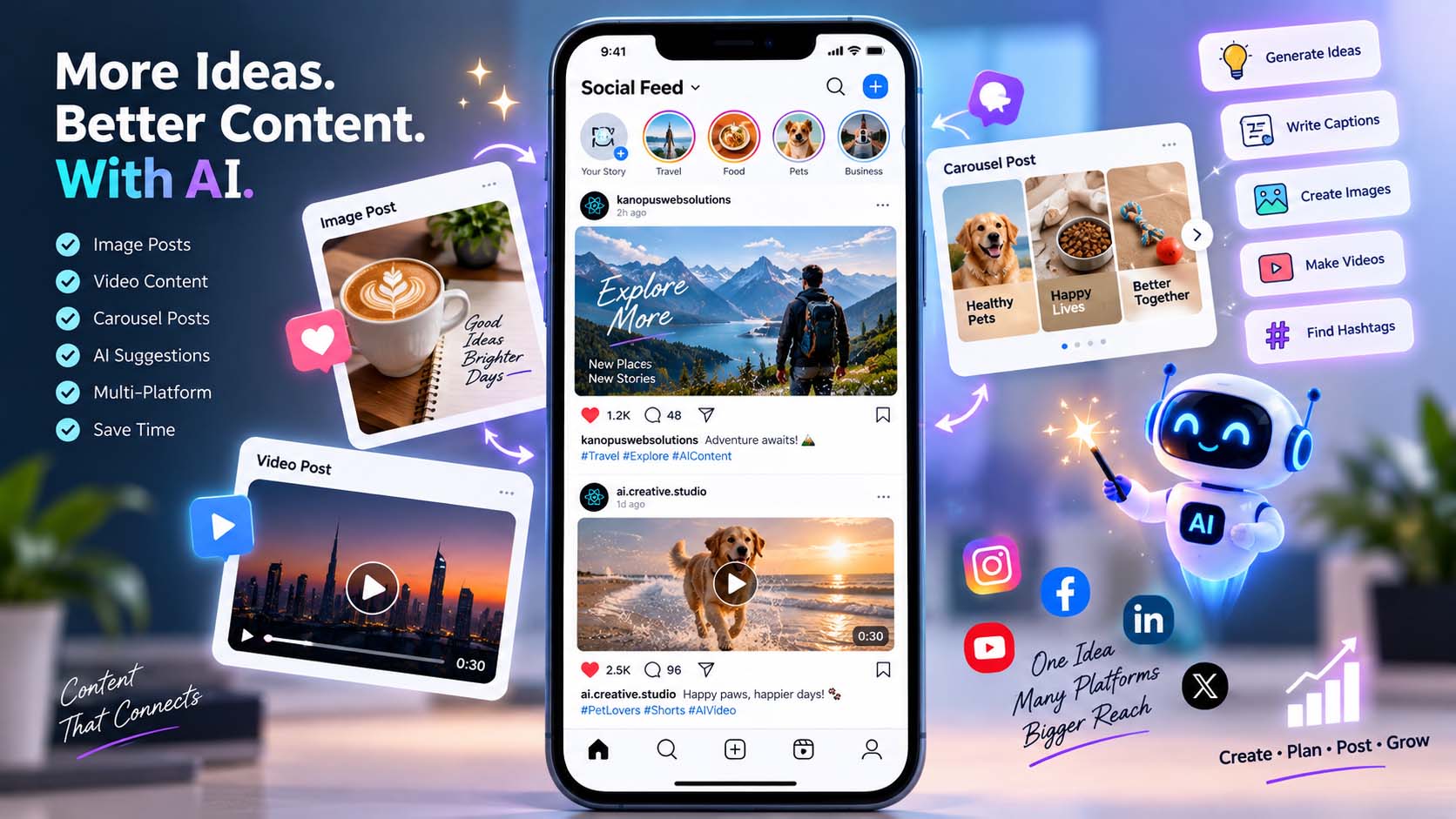
Five years ago, a social media calendar took a team days to plan, write, design, and schedule. In 2026, AI tools can generate a month of caption drafts, suggest matching graphics, and schedule everything across five platforms in an afternoon. The tools genuinely work, and businesses using them well are publishing more consistently than ever.
But faster output isn’t automatically better output, and this is where a lot of businesses run into trouble. Feeds are more crowded with AI-generated content than ever before, which means the businesses standing out in 2026 aren’t the ones posting the most, they’re the ones whose AI-assisted content still sounds unmistakably like them, not like every other brand using the same tool. Understanding exactly where AI genuinely helps, and where it quietly works against a brand, has become a real competitive question, not just a workflow preference.
This distinction is only going to matter more as AI-generated content becomes the default rather than the exception across every industry and platform.
Where AI Is Already Embedded in Social Media Workflows
AI tools now touch nearly every stage of social media production: caption and copy generation based on a brief or topic, AI image and graphic generation for posts that don’t require original photography, automated scheduling that suggests optimal posting times based on audience activity data, and AI-powered analytics that summarize performance trends without someone manually digging through platform dashboards. Some tools now even generate short-form video drafts from a script or product description, compressing a process that used to require a dedicated video editor.
What AI Genuinely Speeds Up
AI is genuinely useful for first-draft captions that a social media manager then edits into the brand’s actual voice, saving the time of starting from a blank page for every post. It’s useful for generating multiple headline or hook variations quickly, letting a team pick the strongest option rather than settling for whatever came to mind first. It also speeds up content repurposing significantly, turning a single blog post or video into a week’s worth of platform-specific content drafts, which used to be one of the more time-consuming parts of a content calendar.
Where AI Still Falls Short
AI-generated captions, left unedited, tend to sound generic, technically correct, reasonably on-topic, but missing the specific voice, humor, or perspective that makes a brand’s content actually recognizable in a crowded feed. Audiences have gotten noticeably better at spotting AI-generated content over the past couple of years, and that recognition tends to reduce trust and engagement rather than build it, especially on platforms where authenticity is part of the appeal.
AI also struggles with genuine timeliness and cultural nuance, understanding exactly why a specific moment, event, or piece of local context matters to a particular audience right now, in a way that feels natural rather than forced. And AI tools have no real judgment about brand risk: they don’t reliably know when a topic, joke, or trend is inappropriate for a specific brand’s voice or current business situation.
How Businesses Are Actually Using AI for Social Media in 2026
The businesses getting genuine value tend to use AI for the repetitive, lower-stakes parts of content production, first drafts, variation testing, basic graphic templates, performance summaries, while keeping a human in charge of anything customer-facing that needs to sound authentically like the brand: community responses, timely or trending content, and anything touching a sensitive topic or current event.
Some businesses are also using AI-powered social listening tools to track brand mentions, sentiment, and emerging conversation topics across platforms in real time, surfacing trends and opportunities faster than manual monitoring ever could, then having a human decide how, or whether, to respond.
The Risk of Over-Relying on AI for Social Content
Publishing AI-generated content without a real editing pass is one of the more common mistakes businesses make once they adopt these tools. It’s tempting to let AI handle an entire month of content unsupervised once it starts producing reasonable drafts, but unsupervised AI content tends to drift toward generic phrasing over time, gradually eroding whatever distinct voice a brand had built up. Platforms have also started adjusting how they distribute obviously AI-generated, low-effort content, which means leaning too heavily on unedited AI output can quietly hurt organic reach over time, not just brand perception.
What This Means for Your Social Media Strategy
The practical takeaway for 2026 isn’t to avoid AI tools, that ship has sailed, and the efficiency gains are real. It’s to be deliberate about where AI fits into the workflow: use it to speed up drafting and reduce the blank-page problem, but keep a human reviewing and editing everything before it goes live, and keep a human entirely in charge of anything requiring genuine judgment, timing, or brand risk assessment.
How Kanopus Uses AI in Social Media Management
Our process uses AI to speed up first-draft captions, generate content variations for testing, and summarize performance data across platforms. Every piece of content that goes live is reviewed and edited by our team to match the client’s specific brand voice before publishing, and anything timely, sensitive, or higher-risk gets planned and written by a person from the start rather than relying on an AI draft as the foundation.
How to Spot AI-Generated Content in Your Own Feed
It’s worth developing an eye for this, both to audit your own brand’s output and to understand what your audience is already noticing. Common tells include unusually formal or repetitive sentence structure across posts, captions that technically make sense but lack any specific, concrete detail about the actual product or moment being described, and a certain flatness in tone that stays consistent regardless of what’s actually being communicated. Genuinely human content tends to have small imperfections and specific, unpredictable details, a particular customer’s actual words, a genuinely unusual moment from behind the scenes, that AI-generated content, even good AI-generated content, still struggles to replicate convincingly.
Reviewing your own recent content with this lens is a useful exercise. If a stretch of posts reads as noticeably flatter or more generic than what your brand used to sound like, that’s often a sign AI has crept further into the unsupervised end of the workflow than intended.
Building an AI Workflow That Protects Your Brand Voice
The businesses managing this well tend to build a specific, documented process rather than leaving it to individual judgment call by call: a clear brand voice guide that any AI tool gets fed as context before generating a draft, a mandatory human edit step before anything publishes, and periodic voice audits, someone reading a month’s worth of published content back to back to check whether it still sounds consistent and genuinely like the brand. This structure doesn’t slow the process down much once it’s in place, but it does prevent the slow, easy-to-miss drift toward generic content that unsupervised AI use tends to produce over time.
Looking Ahead: What Won’t Change
AI tools will keep getting better at drafting, scheduling, and analyzing social content, and businesses that adopt them well will keep gaining a real efficiency advantage over those that don’t. But the fundamental thing that makes social media marketing work, genuine connection with an audience that trusts the brand behind the content, isn’t something AI produces on its own. It’s something a human still has to build, protect, and occasionally step in and defend, especially in a feed increasingly full of content nobody actually wrote themselves.
Setting Realistic Expectations With Your Team or Agency
Whether managing social media in-house or through an agency, it’s worth setting clear expectations upfront about how AI fits into the workflow: which stages use it, who reviews the output, and how brand voice consistency gets checked over time. Teams operating without this clarity tend to drift, sometimes leaning on AI more heavily than intended simply because it’s faster, without anyone deliberately deciding that tradeoff was acceptable. A documented, agreed-upon process prevents that drift before it starts.
The Bigger Picture for Social Media in 2026
Platforms will keep rewarding content that generates real engagement, and audiences will keep getting sharper at spotting content that wasn’t genuinely made for them. Businesses that use AI to work faster while investing that saved time into genuinely better, more specific content will keep winning attention. Businesses that use AI purely to publish more, without that same investment in quality and specificity, will likely see their reach and engagement quietly decline even as their output volume goes up.
Final Thoughts on AI and Social Media Marketing
The tools will keep evolving, but the underlying test for any piece of content stays the same: would this feel worth someone’s time and attention if they knew it was written specifically for them, by people who actually understand their business. AI can help produce more content faster, but it’s still on the business, or the agency working on its behalf, to make sure that content clears that bar before it ever goes live.
Frequently Asked Questions
Most businesses benefit from using AI for first drafts, variation testing, and content repurposing, but final captions and anything customer-facing should still be reviewed and edited by a person to keep the brand voice authentic.
Yes, unedited AI content often reads as generic, and audiences increasingly recognize and disengage from content that feels automated rather than genuinely written for them.
Significantly, for first drafts and repurposing existing content across platforms. It doesn't eliminate the need for review and editing, but it removes a lot of the blank-page time at the start of the process.
Not reliably. AI tools can surface trending topics, but understanding whether and how a brand should participate in a specific cultural moment still requires human judgment about tone, timing, and brand risk.
Yes, we use AI to speed up drafting and repurposing, but every post is reviewed and edited by our team before publishing to keep the brand voice consistent and authentic across every platform.