


Contact Us +91 79925 99257



Written by Kalpesh Prajapati
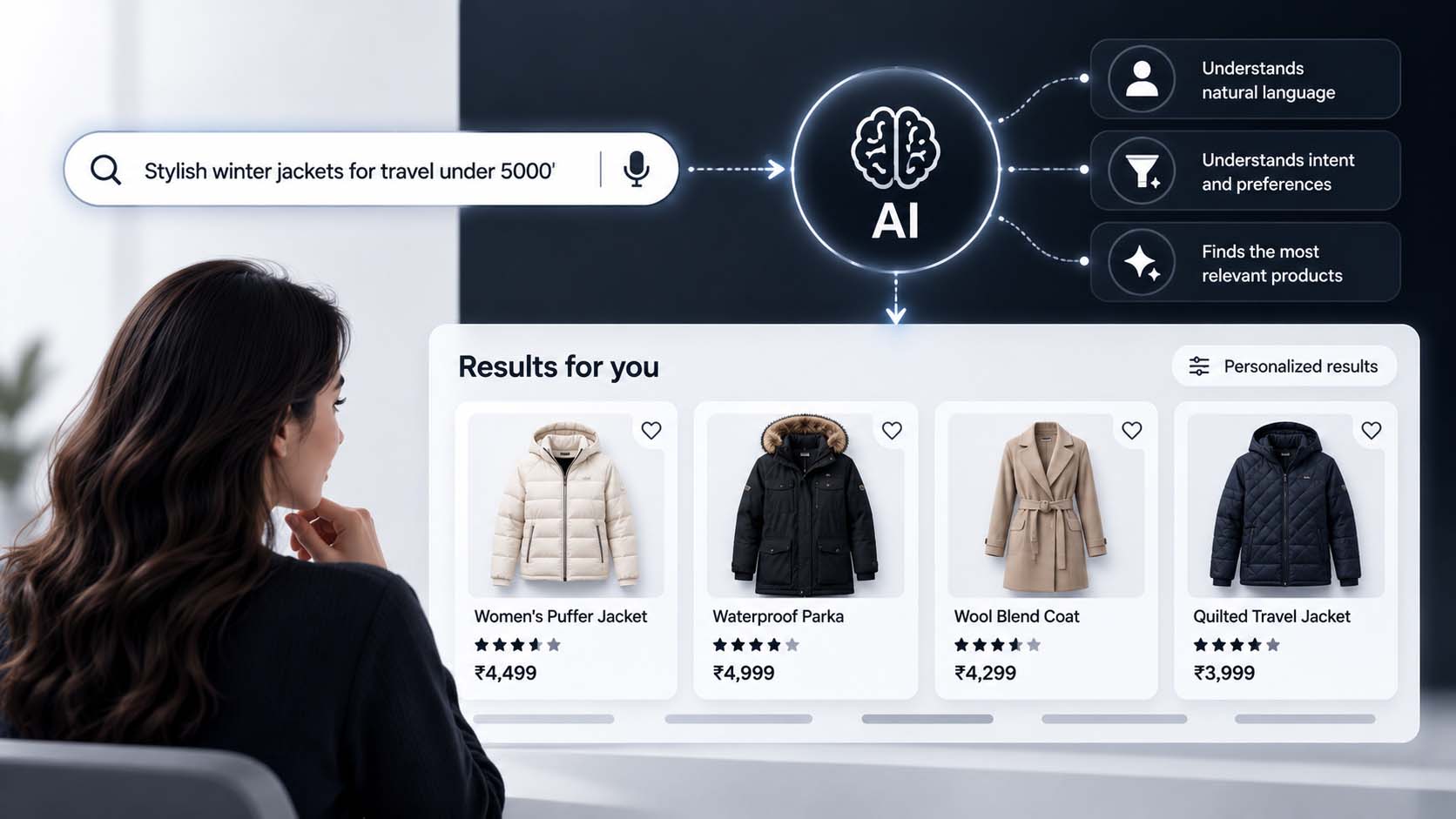
Generic storefronts showing every visitor the same homepage, the same featured products, the same recommendations, increasingly feel out of step with what online shoppers expect in 2026. AI-driven personalization has moved from an enterprise-only luxury to a genuinely accessible capability for BigCommerce stores of nearly any size, reshaping what visitors see based on their actual behavior rather than a single static experience for everyone.
AI now powers product recommendation engines that adjust based on browsing and purchase history, personalized search results that rank products differently for different visitors based on their behavior, dynamic homepage content that highlights different products or categories depending on a visitor’s apparent interests, and AI-driven email marketing that tailors product suggestions to each recipient individually rather than sending the same campaign to an entire list.
Well-implemented personalization genuinely increases conversion rates by surfacing products a specific visitor is more likely to actually want, reducing the time and effort needed to find something relevant in a large catalog. It also increases average order value through smarter, more relevant cross-sell and upsell suggestions than generic ‘customers also bought’ widgets typically achieve, since AI models can account for far more behavioral signals than simple co-purchase data alone.
Personalization engines trained purely on behavioral data can sometimes create an overly narrow experience, repeatedly showing a visitor similar products and missing genuinely relevant items outside their established browsing pattern. There’s also a privacy dimension worth taking seriously: personalization needs to be built on data collection practices that are transparent and compliant with relevant privacy expectations, not just technically effective. A business should understand exactly what data a personalization tool collects and how it’s used, rather than treating this as a purely technical implementation detail.
Common additions include AI-powered search that understands natural language queries and intent rather than requiring exact keyword matches, personalized product recommendation widgets placed throughout the shopping journey, dynamic pricing and promotion targeting based on customer segment behavior, and AI chat assistants that help shoppers find products through a more conversational search experience than a traditional filter and category structure allows.
AI personalization is only as good as the data feeding it. Stores with clean, well-structured product data, accurate categories, complete attributes, consistent tagging, get meaningfully better personalization results than stores with messy, inconsistent product information, since the AI model has clearer signals to work from. Businesses considering AI personalization tools should audit their underlying product data quality first; investing in personalization on top of poor data foundations tends to produce disappointing, inconsistent results regardless of how sophisticated the AI tool itself is.
Many AI personalization tools available in the BigCommerce app ecosystem charge based on traffic volume or the number of personalized interactions served, which means costs can scale meaningfully as a store grows. It’s worth modeling this cost against the expected conversion and average order value improvements before committing, and starting with a focused pilot, personalizing just one high-traffic area like the homepage or search results, before rolling out personalization across the entire store.
A frequent mistake is implementing personalization broadly across an entire store at once without first validating it on a single high-impact page, making it difficult to isolate what’s actually driving any performance change. Another common mistake is neglecting to monitor how personalization affects different customer segments, a recommendation engine that works beautifully for returning customers with rich behavioral history can perform poorly, or even counterproductively, for brand-new visitors with no data yet to personalize from.
AI personalization capabilities within the BigCommerce ecosystem continue to mature quickly, becoming more accessible and more affordable for smaller merchants who couldn’t have justified this kind of investment just a few years ago. Businesses that start building genuinely clean, well-structured product data now, even before investing heavily in personalization tools, will be positioned to get meaningfully more value from these tools as they continue to improve.
AI personalization tends to improve gradually as more customer data accumulates rather than delivering dramatic results from day one. Businesses should expect a reasonable period of baseline performance while the system learns real patterns, with results typically strengthening over the following weeks and months as the underlying model has more genuine behavioral data to draw from.
Heavy personalization can sometimes work against brand consistency if not managed carefully, different visitors seeing dramatically different homepages can make it harder to build a single, recognizable brand identity across all of a store’s visitors. The most effective implementations personalize specific elements, recommendations, search results, targeted promotions, while keeping core brand elements, messaging, visual identity, overall navigation, consistent for everyone. This balance preserves genuine brand recognition while still delivering the relevance benefits personalization offers.
AI personalization was once genuinely limited to businesses with enterprise-level budgets and dedicated data science teams, but that’s no longer the case. A growing number of BigCommerce-compatible tools now make meaningful personalization accessible at a price point and implementation complexity appropriate for much smaller merchants, provided the underlying product data is in good shape. Assuming this technology is still out of reach without actually checking current options often means missing a genuinely accessible competitive advantage.
The merchants seeing the strongest results from AI personalization treat it as an ongoing capability to refine, not a one-time feature to install and forget. Regularly reviewing what the AI is actually recommending, checking it against genuine business judgment, and adjusting as a catalog and customer base evolve keeps personalization delivering real value well beyond its initial implementation.
We start by auditing a store’s existing product data quality, since that foundation determines how well any personalization tool will actually perform. From there, we recommend a focused, measurable pilot rather than a full-store rollout, so a business can see genuine performance data before expanding the investment further, with clear metrics agreed upon before any tool goes live.
Unlike a one-time marketing campaign with a defined end, a well-implemented personalization system keeps improving as more customer data flows through it, meaning the return on this investment tends to grow over months and years rather than diminish. This compounding value is part of what makes AI personalization a genuinely different kind of investment than most other store improvements, one that rewards patience and sustained attention rather than a single setup-and-forget implementation.
Merchants new to AI personalization don’t need to commit to an expensive, comprehensive solution immediately. Many platforms offer tiered pricing or trial periods specifically designed to let a smaller merchant test the waters before a larger investment, making it genuinely reasonable to start small, prove the value on your own store’s actual data, and scale up deliberately once the results justify it.
AI personalization works best as one piece of a broader, coordinated eCommerce strategy, not an isolated initiative disconnected from everything else a store is doing. Aligning personalization efforts with existing email marketing, paid advertising retargeting, and loyalty program data creates a more cohesive, consistently relevant experience across every touchpoint a customer has with a brand, rather than a single personalized moment surrounded by an otherwise generic experience everywhere else.
As personalization becomes more sophisticated, it’s worth periodically checking that the experience still feels helpful rather than unsettling to customers, overly specific or intrusive-feeling recommendations can erode trust even when technically accurate. The goal is relevance that feels like genuine attentiveness, not a reminder of how much data a store has collected about an individual shopper.
The gap between large enterprise retailers and smaller BigCommerce merchants in personalization capability continues to narrow each year, as these tools become more accessible and more affordable. Merchants who engage with this opportunity thoughtfully now, rather than assuming it remains out of reach, are positioning themselves to compete more effectively against much larger players than would have been realistic just a few years ago.
Personalization done well feels like a store that genuinely understands its customers, not a gimmick layered on top of an otherwise generic experience. That distinction, more than any specific feature list, is what separates AI personalization that actually drives revenue from AI personalization that merely checks a box on a feature comparison.
Well-implemented personalization, built on clean product data, commonly increases conversion rates and average order value by surfacing more relevant products to each visitor.
Costs vary by tool and typically scale with traffic volume. Starting with a focused pilot on one high-traffic area helps assess real return before a larger investment.
Meaningful personalization needs enough behavioral data to identify real patterns, but modern AI tools can start working with a smaller BigCommerce store's data than many businesses initially assume, especially when paired with clean product data.
It can be if not handled transparently. Businesses should understand what data a personalization tool collects and ensure practices align with relevant privacy expectations and regulations.
Many tools show measurable results within a few weeks, though the AI model's recommendations typically improve further as more customer behavior data accumulates over time.
If you’re considering AI personalization for your BigCommerce store, Kanopus Web Solutions can audit your product data and recommend a focused, measurable starting point, with clear metrics agreed upon before anything goes live. Call +91 79925 99257 or email info@kanopuswebsolutions.com.