


Contact Us +91 79925 99257



Written by Kalpesh Prajapati
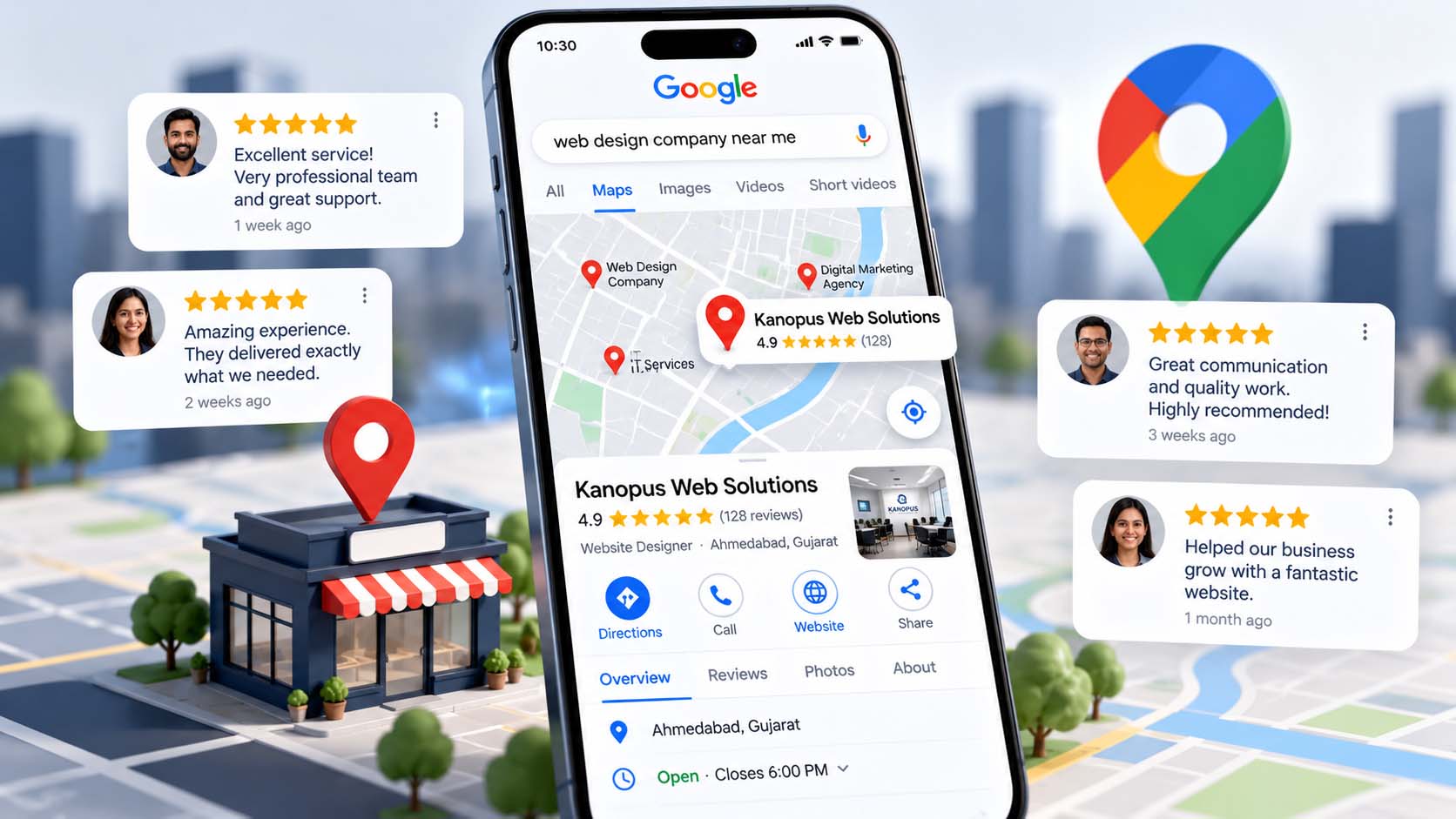
A huge share of local customers search before they ever walk through a door or pick up the phone, checking hours, reading reviews, comparing nearby options. If a business doesn’t show up clearly in those searches, it’s effectively invisible to a meaningful chunk of its potential customers, regardless of how good the actual product or service is.
Local SEO isn’t complicated in concept, but it does require consistent, deliberate work across a handful of specific areas. This checklist covers what actually moves the needle for small businesses trying to rank in local search results in 2026, without wasting time on tactics that sound good but don’t actually influence rankings.
This is the single most important local SEO asset most small businesses have, and it’s also the most commonly under-optimized. A complete profile includes accurate business hours, a detailed and keyword-relevant business description, the correct primary and secondary business categories, high-quality photos updated regularly, and posts published consistently rather than left dormant for months at a time. Businesses that treat their Google Business Profile as a living, regularly updated asset rather than a one-time setup task consistently outperform competitors who set it up once and forget about it.
NAP, name, address, and phone number, needs to match exactly across every place it appears online: the website, the Google Business Profile, directory listings, and social media profiles. Inconsistencies, a slightly different address format, an old phone number still listed somewhere, confuse search engines about which business information is actually correct, which can quietly hurt local rankings even when the business itself hasn’t changed anything.
A periodic audit, searching the business name and checking every listing that appears, catches these inconsistencies before they accumulate into a real ranking problem.
Review volume, recency, and rating all factor into local search rankings, but just as importantly, reviews influence whether a potential customer actually chooses a business once they find it. Businesses that make it easy to leave a review, a direct link shared after a purchase or service, and that respond to reviews, both positive and negative, professionally and promptly, tend to build both stronger rankings and stronger trust with potential customers reading those reviews before making a decision.
Generic service pages rank for generic searches. Content that specifically addresses a local area, a dedicated page for each service location, blog content referencing local events or landmarks, case studies featuring local clients, signals relevance for location-specific searches in a way generic content simply can’t. This matters especially for businesses serving multiple locations or service areas, where a single generic page trying to rank for every location usually underperforms compared to dedicated, genuinely useful pages for each one.
Being listed accurately on relevant local directories, industry-specific listing sites, and local business associations builds the kind of citation signals that support local search rankings. Links from genuinely relevant local sources, a local news mention, a partnership with another local business, a sponsorship listing, carry real weight here. This isn’t about accumulating as many links as possible, it’s about building a handful of genuinely relevant, locally-connected signals that reinforce a business’s legitimate presence in its area.
Most local searches happen on a phone, often while someone is already out and actively deciding where to go. A website that loads slowly or displays poorly on mobile loses exactly the customers local SEO is meant to capture, people ready to act right now. Click-to-call buttons, easy-to-find directions, and a fast-loading mobile experience aren’t optional extras for local businesses, they’re core to converting the local search traffic that good local SEO work is bringing in.
Local search rankings can be tracked directly through tools that monitor position for relevant local search terms, while Google Business Profile’s own insights panel shows how customers are actually finding and interacting with a listing, calls, direction requests, website clicks. Tracking these specific metrics, rather than only general website traffic, gives a much clearer picture of whether local SEO efforts are actually translating into the phone calls and visits a small business ultimately cares about.
We start with a full audit of a business’s current local presence, Google Business Profile completeness, NAP consistency, existing reviews and citations, before building out a prioritized plan. Local SEO tends to reward consistent, ongoing effort more than any single big fix, so we treat it as an ongoing part of a business’s marketing, not a one-time project with a defined end date.
Even businesses doing most of this checklist well sometimes undercut their own progress with avoidable mistakes: letting a Google Business Profile go stale for months after initial setup, ignoring negative reviews instead of responding professionally, or creating near-duplicate location pages that read as thin, templated content rather than genuinely useful, location-specific information. Search engines, and real customers, both notice when local SEO effort looks like a box-checking exercise rather than a genuine investment in serving the local community well.
Local SEO works best as one coordinated piece of a broader marketing approach rather than an isolated task. Paid local search ads can capture high-intent searches while organic local SEO builds over the following months, and social media activity referencing local events or community involvement reinforces the same local relevance signals search engines are already looking for. Businesses that treat local SEO as connected to their overall marketing, rather than a separate checklist handled independently, tend to see stronger, more durable results across every channel.
Local SEO rewards consistency far more than any single clever tactic. A business that steadily works through this checklist over several months, rather than attempting everything at once and then abandoning it, tends to build a durable local presence that keeps paying off well beyond the initial effort invested.
Local SEO works best broken into a manageable, repeatable routine rather than tackled as one large initial push: a monthly Google Business Profile post and photo update, a quarterly NAP consistency check across directories, ongoing review responses as they come in, and a periodic look at local search rankings to catch any decline early. This kind of steady cadence, maintained over many months, consistently outperforms a single intensive effort followed by months of neglect.
Local SEO rarely delivers an overnight transformation, but it compounds reliably when maintained consistently. Businesses that stick with the fundamentals, an active profile, consistent information, steady reviews, relevant content, month after month, tend to build a local search presence that’s genuinely difficult for less consistent competitors to displace once established.
It’s worth tracking local SEO progress against outcomes that genuinely matter to the business, calls received, direction requests, in-store or in-office visits attributable to search, rather than vanity metrics like profile views alone. This connection between local SEO activity and real business results is what justifies continued investment and helps prioritize which parts of the checklist deserve the most ongoing attention for a specific business.
Businesses that set up their local presence once and then stop paying attention often don’t notice the slow decline until a competitor with a more actively maintained profile starts consistently outranking them. Outdated hours, stale photos, and unanswered reviews all signal to both search engines and real customers that a listing isn’t being actively managed, which quietly erodes both rankings and the trust a well-maintained profile builds with people deciding where to go.
Local SEO ultimately serves real people trying to find a real business nearby, every optimization decision is worth filtering through that lens rather than treating it as an abstract ranking exercise. A profile that genuinely helps a confused searcher find accurate hours, real photos, and honest reviews will naturally perform well in search, because that’s precisely what search engines are trying to reward in the first place.
Breaking local SEO into a short recurring monthly task list, update the Google Business Profile with a new post and photo, check for and respond to any new reviews, verify no NAP inconsistencies have crept in anywhere, and glance at ranking movement for a handful of priority search terms, keeps the work manageable without requiring a dedicated full-time hire for most small businesses.
As AI-driven search tools increasingly surface direct answers to local queries, closest option, best-rated nearby, who’s open right now, the fundamentals covered in this checklist matter even more, since these same accurate, well-structured signals are exactly what AI tools draw on to answer those questions correctly. A business with its local presence genuinely in order is better positioned for both traditional and AI-driven local search, without needing a separate strategy for each.
Many businesses start seeing movement in local rankings within 2 to 3 months of consistent optimization, though competitive areas and incomplete initial listings can extend that timeline somewhat.
Yes, it's typically the single highest-impact asset for local search visibility, directly influencing whether a business appears in the local map results most local searchers check first.
If your business genuinely serves multiple distinct locations, yes, dedicated location pages generally outperform a single generic page trying to rank for every area at once.
There's no fixed number, but review volume, recency, and rating all factor in, so consistently collecting new reviews over time matters more than hitting a specific total or chasing an arbitrary benchmark.
Basic steps like claiming your Google Business Profile and ensuring NAP consistency can be done independently, but ongoing content, citation building, and review management benefit from dedicated, consistent attention.
If your business isn’t showing up when local customers search for what you offer, Kanopus Web Solutions can audit your current local presence and build a realistic, prioritized plan to fix it. Call +91 79925 99257 or email info@kanopuswebsolutions.com.