



Shopify 20 Aug 2026
Shopify vs WooCommerce: Which Platform Fits Your Store in 2026?

Written by Kalpesh Prajapati
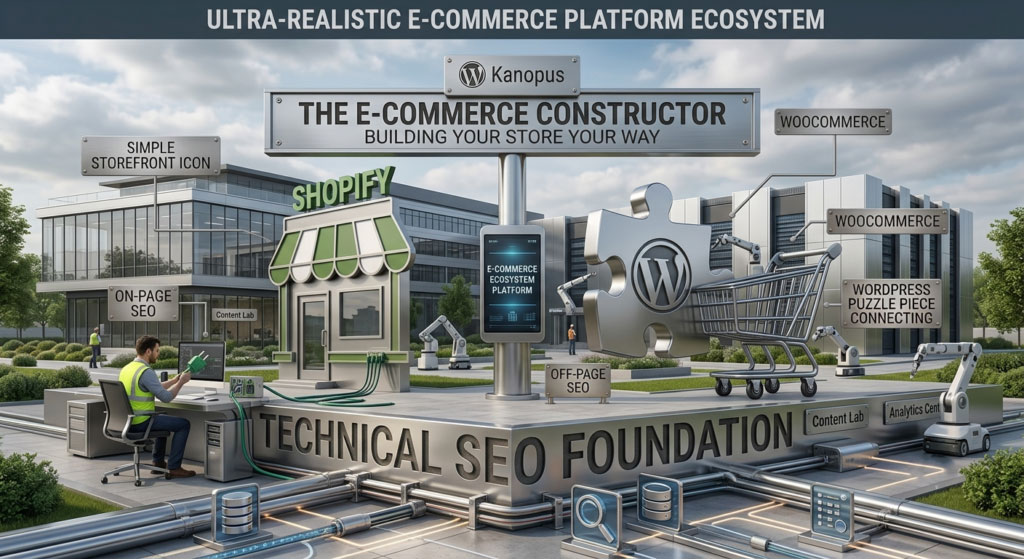
The ‘best’ eCommerce platform question doesn’t have one right answer, it has one right answer for your specific store. Shopify and WooCommerce both power millions of stores worldwide, but they’re built on completely different philosophies. Picking the wrong one means either overpaying for features you don’t need or fighting your platform’s limits later, right when your business is trying to grow.
Both platforms are genuinely good choices for a huge range of businesses, which is exactly what makes the decision harder rather than easier. This isn’t a question of which platform is objectively better. It’s a question of which philosophy, hosted and managed versus self-hosted and flexible, actually fits how a specific business operates and plans to grow.
The Core Difference Between Shopify and WooCommerce
Shopify is a fully hosted, all-in-one platform. Hosting, security, and updates are handled for you, and the store runs on Shopify’s infrastructure from day one. WooCommerce is a plugin that turns an existing WordPress website into a store, which means you’re self-hosting and responsible for more of the technical maintenance, but you also get significantly more control over customization and how content and commerce work together.
When Shopify Makes More Sense
Shopify tends to be the better fit for businesses that want to launch fast without managing a development team long-term, have a fairly standard product catalog, and want hosting, uptime, and security handled without thinking about it. It’s a strong choice for founders who want to focus on running the business rather than managing server infrastructure.
When WooCommerce Makes More Sense
WooCommerce fits better when a business already has a content-driven WordPress site, a blog, resource pages, or a following built around content, and wants the store to live in that same ecosystem instead of running as a separate platform. It also makes sense for businesses that want full control over customization, hosting choices, and long-term costs, and are comfortable with (or already have) some technical support to manage plugins and updates.
Cost Comparison Over Time
Shopify runs on a predictable monthly subscription, plus the cost of any additional apps needed for specific features. It’s simple to budget for but can add up as more apps get layered on. WooCommerce has no platform subscription fee itself, but costs come from hosting, plugins, and developer time for setup and maintenance. For smaller stores, Shopify’s predictability often wins. For larger or fast-growing catalogs, WooCommerce can end up more cost-efficient long-term, though it requires more hands-on management.
Common Myths About Both Platforms
A common myth is that Shopify is only for small stores, when in reality Shopify Plus supports large, high-volume enterprise brands processing significant order volume. Another common myth is that WooCommerce is inherently insecure, when security really comes down to how well the site is maintained, kept updated, and configured, not a fundamental flaw in the platform itself. Both myths tend to steer businesses toward the wrong decision for the wrong reasons.
How Content and Commerce Work Differently on Each Platform
This is one of the most underrated parts of the decision. On WooCommerce, your blog, resource pages, and store all live inside the same WordPress install, sharing the same navigation, the same design system, and the same SEO foundation. For a business that publishes regular content, guides, tutorials, industry articles, that integration makes it easier to turn readers into customers without sending them to a separate platform.
Shopify keeps commerce as the core focus, and while it does support blogging, content tools are noticeably lighter than WordPress’s. For a store that’s primarily transactional, browse, add to cart, checkout, this rarely matters. For a brand built around content marketing and organic traffic from blog posts, it’s a real factor worth weighing before committing to a platform.
App and Plugin Ecosystems: What to Expect From Each
Shopify’s app store is tightly curated and generally reliable, but individual apps often come with their own monthly fees that stack up as a store adds more functionality. WooCommerce’s plugin ecosystem is larger and more variable in quality, with many free options alongside paid ones, which gives more flexibility but also puts more responsibility on the business (or its developer) to choose plugins that are well-maintained and won’t conflict with each other.
Neither approach is inherently better. Shopify trades some flexibility for predictability and support. WooCommerce trades some of that predictability for lower long-term cost and deeper customization potential, provided the technical side is managed properly.
Checkout and Payment Flexibility: A Real Difference Worth Knowing
Shopify’s checkout is fast, well-optimized, and reliable out of the box, but historically offered less flexibility to customize the checkout flow itself compared to WooCommerce, where the entire checkout experience can be modified more freely since it’s built on open, customizable WordPress and WooCommerce code. For most stores this difference doesn’t matter much. For businesses with an unusual checkout requirement, custom shipping logic, complex multi-step ordering, tight integration with a specific local payment gateway, it can be a deciding factor worth discussing with a developer before committing to either platform.
What Ongoing Support Looks Like on Each Platform
Shopify handles platform-level updates automatically, so ongoing support usually focuses on theme customization, app management, and marketing-related changes. WooCommerce requires more active oversight, keeping WordPress core, the WooCommerce plugin, and every other installed plugin updated and compatible with each other, along with monitoring hosting performance directly.
Neither is necessarily more expensive over time, but the type of support each one needs is genuinely different. Businesses without any internal technical resource often lean toward Shopify for this reason alone, while businesses that already have a developer relationship (in-house or agency) find WooCommerce’s added flexibility worth the extra oversight it requires.
A Practical Way to Make the Final Decision
Rather than comparing feature lists in the abstract, it helps to answer three specific questions about your own business: does the store need to live alongside an existing content strategy or blog, is there already technical support in place to manage ongoing maintenance, and how large and complex is the product catalog expected to become over the next two to three years. A store with a strong content strategy, existing technical support, and a catalog likely to grow in complexity tends to lean WooCommerce. A store that needs to launch quickly, without ongoing technical management, and with a fairly standard catalog tends to lean Shopify.
Neither answer is permanent. Plenty of businesses start on one platform and migrate to the other as their needs change, and that flexibility is worth remembering if the decision still feels uncertain. Getting started with the platform that fits today’s needs matters more than trying to predict every future requirement in advance.
What This Looks Like for a Real Business
Consider two founders launching around the same time. One is opening a curated home goods store with a fairly focused catalog and no development team, and wants to be selling within a few weeks; Shopify gets that business live fast, with predictable monthly costs and no server management to think about. The other already runs a blog with a loyal readership around a specific hobby and wants to start selling related products without abandoning that content or splitting traffic across two separate platforms; WooCommerce keeps everything under one roof and lets the existing audience convert more naturally.
Neither founder made a wrong choice, they made the choice that matched their starting point. That’s the real takeaway behind the Shopify-versus-WooCommerce debate: it was never about which platform is better in the abstract, only about which one matches where a specific business is starting from and where it’s trying to go.
Questions Worth Asking Before You Commit to a Platform
Before signing off on either platform, it’s worth asking a development partner a few direct questions: what happens to the store’s design and functionality if the business later needs a feature the platform doesn’t naturally support, how much of the current cost estimate is platform fees versus development and design work, and what an actual month-to-month cost looks like a year or two down the line as the catalog and traffic grow, not just at launch. These answers often reveal more about long-term fit than any feature comparison chart.
It’s also worth asking directly about migration paths, not because a switch is expected, but because understanding what a future move would involve gives a clearer picture of how much flexibility a business is actually retaining with either choice. A development partner who can answer these questions clearly, without steering the conversation toward whichever platform they happen to prefer building on, is generally the one worth trusting with the decision.
How Kanopus Approaches This Decision With Clients
We build on both platforms regularly, which means we don’t have a default answer we reach for before understanding a project. A typical first conversation covers current catalog size and expected growth, whether content marketing is already or will become part of the strategy, what internal technical resources exist today, and what a realistic launch timeline looks like. From there, we lay out a genuinely balanced comparison specific to that business, rather than a generic pros-and-cons list copied from one project to the next, so the final decision reflects the business in front of us, not a template.
Frequently Asked Questions
Shopify is generally easier for beginners since hosting, security, and updates are handled for you, requiring less technical knowledge to get started and maintain day to day.
Yes, migrations between platforms are possible while preserving product data and SEO rankings, though it does require careful planning to avoid losing traffic during the switch.
Shopify handles security and hosting for you by default. WooCommerce can be just as secure, but it depends on how well the site is maintained, updated, and configured over time.
Not for basic setup on either platform, but custom design, advanced features, or complex integrations typically benefit from developer involvement on both Shopify and WooCommerce.
Both can handle large catalogs, but if you're managing thousands of SKUs with complex pricing or B2B needs, it's worth also considering Magento or BigCommerce alongside these two.