



Uncategorized 07 Sep 2026
Why Magento Is Still the Top Choice for Large Product Catalogs

Written by Kalpesh Prajapati
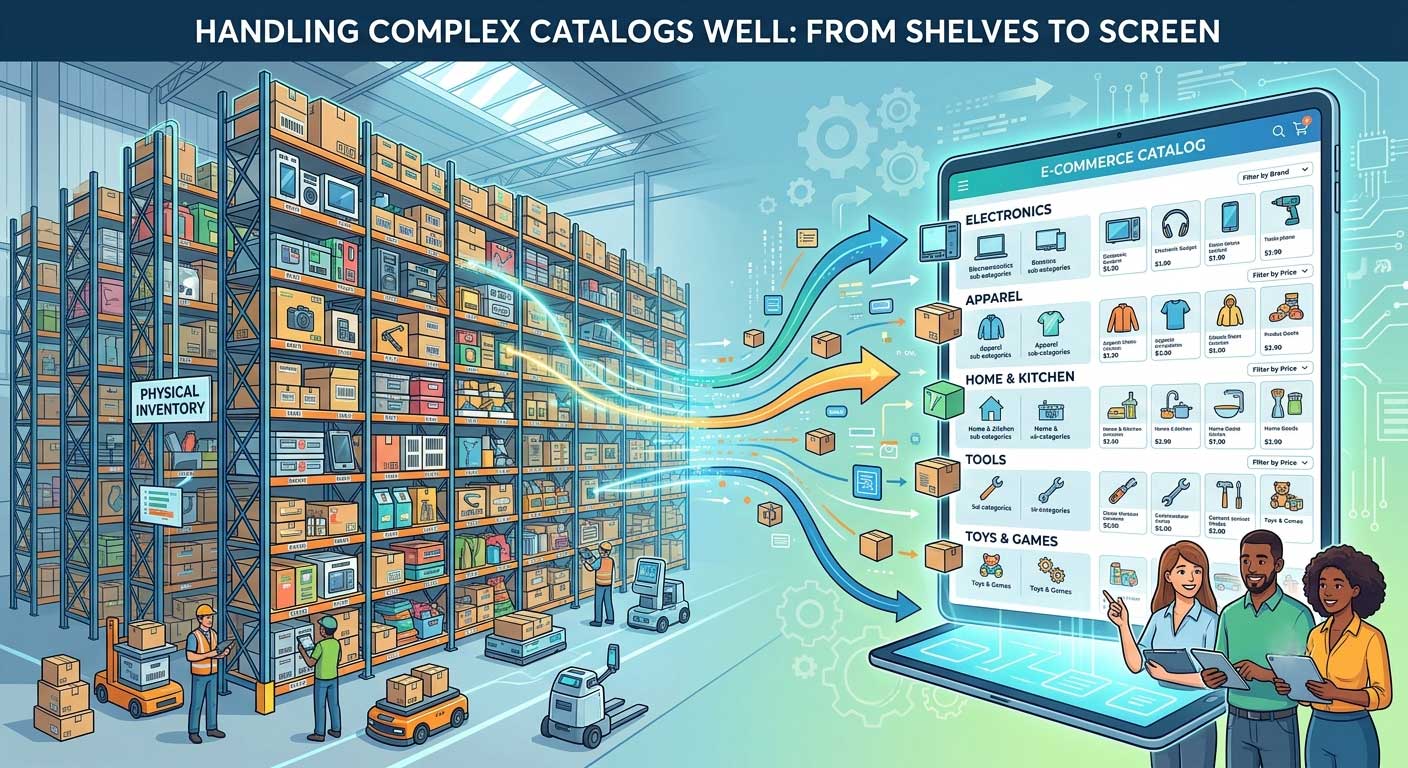
Once a store crosses a few thousand SKUs, platforms built for simplicity start to strain. Category structures get messy, pricing rules break down, and admin panels slow to a crawl. Magento was built specifically for stores that outgrow that ceiling, which is exactly why it’s still the platform enterprise and B2B sellers reach for in 2026.
This isn’t a platform every business needs, and it was never meant to be. But for the specific subset of businesses that genuinely run into catalog complexity, understanding what Magento actually offers, and what it costs in return, makes the difference between a store that scales smoothly and one that keeps hitting the same walls on a platform that was never built to handle its size.
What Makes Magento Different From Other eCommerce Platforms
Magento is open-source and built for deep customization from the ground up, rather than starting simple and adding features through third-party apps. Its architecture is specifically designed to handle catalog complexity: large numbers of products, multiple attributes and variants, and advanced store structures. Under Adobe, the platform is also available as Adobe Commerce, which adds enterprise-level features and support on top of the same core architecture.
Where Magento Genuinely Outperforms Shopify and WooCommerce
Magento handles complex pricing rules well, including tiered and negotiated B2B pricing that many other platforms struggle to support natively. It manages large catalogs with many product attributes and variants without the performance drag that smaller platforms experience at scale. It also supports true multi-store management, running multiple storefronts, currencies, and languages from a single backend, which is genuinely useful for businesses selling across regions or brands from one operation.
Who Magento Is Actually Built For
Magento tends to make the most sense for businesses managing thousands of SKUs, B2B sellers with negotiated or tiered pricing structures, multi-brand or multi-region retailers running several storefronts from one system, and businesses whose customization needs genuinely go beyond what app marketplaces on other platforms can support.
The Trade-Offs of Choosing Magento
Magento generally comes with a higher development cost than Shopify or WooCommerce, since much of its power comes from custom development rather than plug-and-play apps. It also requires more ongoing technical maintenance to keep performance strong as a catalog grows. For a small catalog that just needs a fast, simple launch, Magento’s depth often isn’t necessary and a lighter platform will get to market faster and cheaper.
Signs Your Business Has Outgrown a Simpler Platform
A few signals tend to show up consistently: hitting product or variant limits on a current platform, needing custom pricing logic that available apps simply can’t handle, managing multiple storefronts manually because the current platform doesn’t support it natively, and noticing the admin panel slowing down as the catalog grows larger. Any one of these on its own might not be a dealbreaker, but a few showing up together usually signals it’s time to seriously evaluate a move to Magento.
What a Magento Build Actually Involves
Unlike a Shopify or WooCommerce launch, where much of the store gets configured through existing themes and apps, a Magento build typically involves more upfront architecture planning: mapping out category structures that will still make sense at ten times the current catalog size, planning attribute sets so filtering and search stay accurate as products get added, and deciding early how pricing rules, customer groups, and multi-store logic will actually work together rather than retrofitting them later.
This planning phase is one of the main reasons Magento projects take longer and cost more than simpler platform builds. It’s also exactly why stores that genuinely need this level of structure benefit from it: the extra time upfront prevents the catalog from becoming unmanageable as it scales, which is the exact problem that pushed the business toward Magento in the first place.
Performance at Scale: Why It’s Worth the Investment
A store with a few hundred products can run acceptably on almost any platform. A store with tens of thousands of SKUs, multiple price tiers, and heavy daily traffic needs an architecture built to handle that load without slowing to a crawl during peak periods, sale events, or bulk catalog updates. Magento’s caching, indexing, and database structure are built with this kind of scale in mind from the ground up, rather than bolted on as an afterthought.
For businesses at this scale, slow admin performance isn’t just an inconvenience, it directly costs time across a team that’s updating products, processing orders, and managing inventory daily. The performance investment in a properly built Magento store tends to pay for itself in operational efficiency alone, separate from any direct impact on customer-facing site speed.
B2B Features That Make Magento Stand Out
Beyond catalog handling, Magento’s B2B capabilities are a major reason enterprise and wholesale sellers gravitate toward the platform. Custom pricing per customer or customer group, negotiated quotes, company account structures with multiple buyers under one business account, and bulk ordering tools are all supported at a depth that most other platforms only approximate through third-party apps. For a business selling primarily to other businesses, rather than individual consumers, this native B2B support often ends up being the deciding factor over any other single feature.
Retailers running both B2B and B2C out of the same store also benefit from Magento’s flexibility here, since it can present different pricing, catalogs, and purchasing experiences to each customer type from within a single unified backend, rather than requiring two entirely separate systems.
Choosing the Right Development Partner for a Magento Project
Because Magento projects lean more heavily on custom development than app-based platforms, the development partner matters more here than it might on a simpler build. It’s worth asking specifically about a team’s experience with Magento’s architecture, how they approach performance testing before launch, and how they handle ongoing support once the store is live, since Magento stores generally need more active technical maintenance than a Shopify or WooCommerce store over time.
A development partner who treats Magento as just another platform to configure, rather than one that requires genuine architectural planning, is one of the more common reasons Magento projects underdeliver relative to their cost. The platform’s strength comes specifically from the depth of planning behind it, and that’s not optional the way it can be on lighter platforms.
Making the Decision With Confidence
Choosing Magento isn’t about picking the platform with the most features on paper, it’s about recognizing that a specific type of business, one with real catalog complexity, B2B pricing needs, or multi-store operations, genuinely outgrows what lighter platforms were designed to handle. For businesses that fit that profile, the extra investment in development and maintenance pays for itself many times over in a store that keeps performing as it scales, rather than requiring a painful platform migration a few years down the line.
For businesses still unsure whether they’ve reached that point, an honest conversation with an experienced Magento team, one willing to say a simpler platform might actually be the better fit for now, is worth more than a sales pitch for the most complex option available.
What to Prepare Before You Approach a Magento Development Team
Coming to the first conversation with a few things ready speeds up the entire process and leads to a more accurate estimate: a rough sense of current or projected catalog size and how fast it’s growing, any specific pricing rules or B2B requirements the business already knows it needs, a list of systems the store needs to integrate with, ERP, accounting, fulfillment, and a realistic sense of timeline and budget range. None of this needs to be finalized in detail, but even rough answers let a development team scope the project accurately from the first conversation rather than guessing at requirements that only surface midway through the build.
Businesses that skip this preparation often find scope, and cost, creeping upward mid-project as previously unstated requirements surface one at a time. A short planning conversation upfront, even before a formal proposal, tends to prevent most of that drift.
The Long View on Investing in the Right Platform
Choosing a platform is rarely just a technical decision, it’s a bet on how the business will look several years from now. A store that picks Magento too early pays for complexity it doesn’t yet need. A store that stays on a simpler platform too long eventually pays a steeper price migrating under pressure, often while trying to keep a growing, revenue-generating store running during the switch. The businesses that navigate this best are the ones that revisit the question periodically, checking in on catalog size, pricing complexity, and operational strain every year or two, rather than treating the original platform choice as permanent regardless of how much the business has changed since.
How Kanopus Supports Magento Projects End to End
Our Magento work covers the full lifecycle: architecture and catalog planning before a single line of code gets written, custom development and theme work built around the brand rather than a stock template, migration from an existing platform with SEO and product data preserved, and ongoing performance monitoring once the store is live. Because Magento stores need more active technical oversight than lighter platforms, we treat post-launch support as a core part of the engagement, not an afterthought tacked on once the store goes live.
Frequently Asked Questions
Magento generally requires more technical involvement to manage day-to-day compared to Shopify, but that added complexity comes with significantly more control and scalability for large or complex catalogs that outgrow lighter platforms.
Magento Open Source is the free, self-hosted version, while Adobe Commerce (the current branding for Magento's enterprise product) adds enterprise-level features, cloud hosting options, and official support on top of the same core platform.
Yes, migrations from platforms like Shopify, WooCommerce, and BigCommerce can preserve product data and existing SEO rankings when handled carefully with proper redirects and technical planning throughout the process.
Costs depend on catalog size, customization needs, and required integrations. Reach out to Kanopus Web Solutions for a quote based on your specific project scope and business requirements.
Not always right away. If your catalog and pricing needs are still fairly simple, a lighter platform may get you to market faster, with Magento becoming worth considering once complexity genuinely increases over time.